The Reeves Shuffle Explained
We're in the studio today, and it's shuffle day. How fitting it is to talk about the Reeves Shuffle, and what we mean by the Reeves Shuffle, on “Shuffle Day.” (EVERY tune we did that day was a shuffle, or so it seemed). I guess it was several months ago that I created a tribute video to a dear friend of mine, Randy Reeves, who we lost way too soon. He was a huge influence on me as a drummer growing up, and he had the unique ability to play a double or full shuffle, but he put his own little spin on it, and that's what we're going to talk about today. But before I get into that, I want to give you a little background on Randy Reeves.
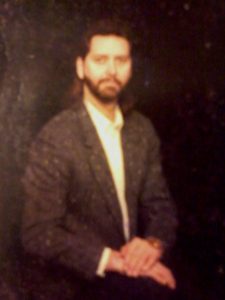 Randy was just an incredible human being, and an incredible musician. He toured with Johnny Lee and other well known acts, and I followed him everywhere. I wore him out, and as a young kid barely in my teens, I followed him all over Houston and in the studio. I had the privilege of sitting and watching him in his element doing his thing, and it was a master class. He kind of took me under his wing, and I'll forever be grateful to him for that. But, one of the things that I saw him do was the Reeves Shuffle, and I've not seen anybody prior to, or since then, do it this way. I was just in Houston visiting a couple of friends of mine in the music business who knew Randy, and we were talking about this very topic. We were talking about Randy and the Reeve's Shuffle, and they made the same comment. They have never seen anybody do it prior to, or since him, either. Other than those of us who were influenced by him and saw him do it and learned it first-hand. I immediately said, “I need to do a video on that.” So here it is. It's kind of a unique take on a double or full shuffle. And when I say the double shuffle or full shuffle, it's synonymous terms (to me anyway).
I've only seen one other variation or one other person do a variation of it, and that was Steve Gadd in a video I just recently saw. The first time I saw Reeves play this particular groove was on a gig that Randy was doing, and they were covering a Reba McIntyre tune called Little Rock. I guess it was probably in the mid-80s, probably 1985 or 1986, Reba came out with her album called Whoever's In New England. On that album was a song called Little Rock. I believe Matt Betton was the drummer on that album and an incredible drummer. He played on a lot of albums and recordings. You can check out his discography by clicking here. But go get that album and listen to that song and hear him do the double shuffle. It was just incredible. But the first time I'd seen it live was when Randy Reeves was covering that tune with the band he was in, which was made up of a bunch of session musicians there in Houston, and it was an incredible band that I would later be fortunate to be in when Randy moved and played for David Lynn Jones. I watched him do it, but I'd never seen it done this way. So I want to take a little time to walk you through what I mean by the Reeve's shuffle, and what a lot of my other Houston peeps refer to as the Reeve's shuffle.
Note: Audio is from the Canon Vixia Mini X camera.
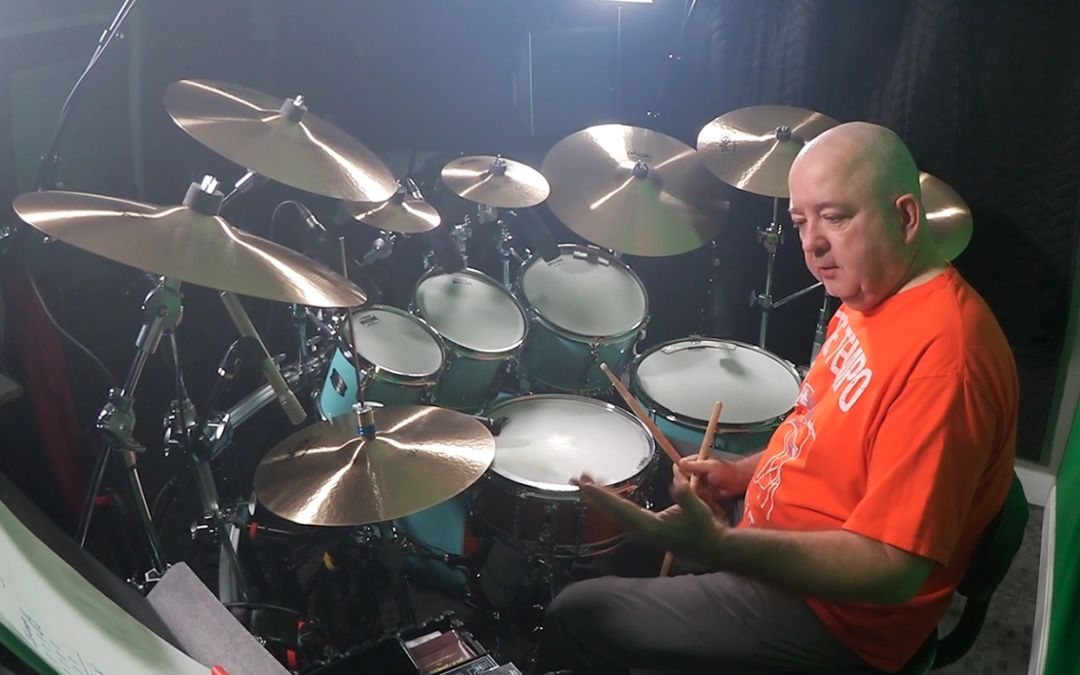
So on the double shuffle, you basically have both arms doing a shuffle pattern, with the left accenting on the 2 and the 4 (or whichever hand is being used for the back beat, depending on if you're playing left-handed or open-handed). While this is going on, you have 4 on the floor with your kick. Now, the common version that most people are familiar with is mostly played with the hi-hat being played with the foot on every beat or the 2 and 4 of the measure.
Now, what Reeves was very, very good at and taught me to do was to not only listen to the vocalist, but to really listen to the rest of the band. With that said, typically on a song like that, with that pattern, the guitar player is doing a little vamp or chunk on the guitar on the off beat or the and of the beat. The piano player, if you have one in the band, the steel player, fiddle player, etc. are typically doing the same thing. So what Reeves did and what the Reeves shuffle is all about is, he did that with them using the hi-hat. He put the hat on the and of the beat. When you do that, just watch the reaction of the other band members. They're going to notice something different because they've never heard it like that before, I promise you. And when they hear that, they're going to instantly dig it because now they have a reference point and it just tightens everything up. Now in a studio/session setting, sometimes the left hand shuffling (if you play right handed) can get a little too busy. Some producers don't like that. They just like 2 and 4 on the snare, so do what the client wants. But I'll still do hi-hat on the and of the beat a lot of times to make it lope and make it flow. On a live gig, mainly a country 4/4 walking tune, 99% of the time, I'm doing the Reeves Shuffle, or variation of it. I also use it a lot on 3/4 tunes with a walking bass line. This was really cool when doing a lot of cajun tunes. Below is an example of me actually using the Reeves Shuffle on a recording session, so you can see how I implemented it in a real life scenario.
Note: Audio is from the Canon Vixia Mini X camera.
Now, the variation that I saw Steve Gadd do was basically quarter notes on the hat instead of shuffling, and if you listen in the video above, it still gives the feel of a shuffle. It still lopes, and it's really cool when you play around with it. That's the only other person that I've seen do the hat on the and of the beat or off beat, and that was Gadd's take on it.
Over the years (decades), this groove has kind of become part of “my sound,” and something I'm known for playing. I've kind of made it my own and do some things a little differently on occasion, like put some ghost notes on the snare and hi-hats in various places, so play around with it. But in a nutshell, that is the Reeves shuffle.
So feel free to comment. Let me know your preference and what version of the double shuffle you like the best. Feel free to follow me on social media, and go to the website jpmorrisondrums.com. If you do go over to the website, be sure and sign the guest book, and let me know you dropped by. I'd love to follow you back on social media and all of those different platforms. Thanks for tuning in, and I hope I brought some value and some insight on the Reeves shuffle in honor of my good friend Randy Reeves.
Take Care and keep groovin'!

J. P. Morrison
jp@jpmorrisondrums.com
Did you enjoy this content? If so, I would greatly appreciate it if you commented below, liked it, and shared it on Facebook and other social media platforms.
P.S. Be sure to follow me on all of the social media platforms and subscribe to my channels. The links are below.
P.P.S. Reeves, hopefully I did “The Reeves Shuffle” justice! I miss you big time!